By Forward Digital
How to Protect Your Music from Piracy in 2026: The Complete Guide
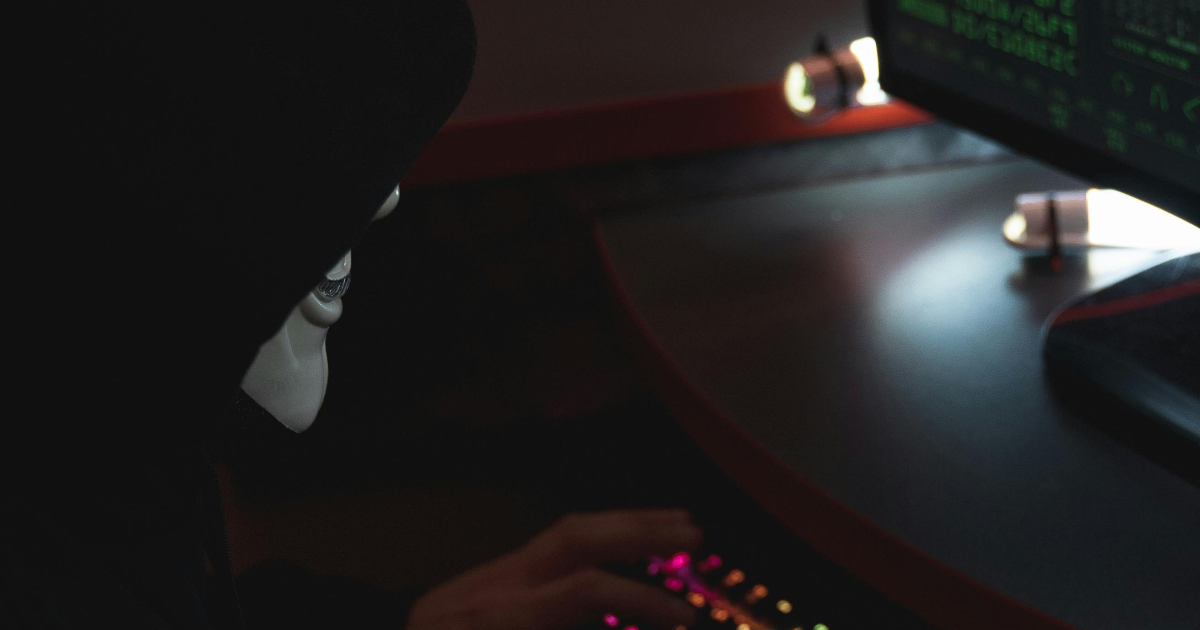
Piracy sites receive over 215 billion visits per year globally. Stream-ripping now affects 29% of all listeners according to IFPI. Apple Music identified and demonetized 2 billion fraudulent streams in 2025 alone. And AI has supercharged the problem: 60,000 AI-generated tracks are uploaded daily to streaming platforms, with up to 85% of those streams flagged as fraudulent. Streaming fraud costs the music industry an estimated $2 billion every year. For independent labels and artists, protecting your music from piracy in 2026 requires a combination of legal registration, automated monitoring, AI detection, and strategic enforcement. This guide covers every layer of protection available to you today.
Step 1: Register Your Copyright
Your music is automatically protected by copyright the moment you create it in the US, UK, EU, and most countries under the Berne Convention. However, registration provides critical legal advantages. In the United States, registering with the U.S. Copyright Office allows you to sue for infringement in federal court, claim statutory damages of $750 to $150,000 per work without proving actual damages, and recover attorney's fees. The key limitation: you can only claim statutory damages if you register before infringement occurs or within three months of publication. After that window, you are limited to actual damages, which are harder to prove and often much lower. Registration costs $65 per work online through copyright.gov. For labels releasing multiple tracks, the group registration option allows registering up to 10 unpublished works for a single fee. In the EU, copyright registration is not required since protection is automatic, but depositing works with a notary or collecting society (SACEM, GEMA, SIAE, SGAE) creates a timestamped record of ownership that strengthens your position in disputes.
Step 2: Embed Metadata and Audio Fingerprints
Before distributing any release, ensure your audio files contain complete metadata: artist name, track title, album, ISRC code, copyright holder, and contact information. This metadata travels with the file wherever it goes and serves as proof of ownership when pirated copies surface. ISRC codes (International Standard Recording Codes) are unique identifiers assigned to each recording. They are free to obtain through your national ISRC agency or distributor. Every track you release should have an ISRC code. Audio fingerprinting systems like YouTube Content ID, Spotify's audio recognition, and Apple's Shazam create a unique acoustic signature of your track. When someone uploads your music to these platforms, the fingerprint system detects it automatically and either blocks it, monetizes it on your behalf, or notifies you. Register with Content ID through your distributor. This is one of the most effective passive protection mechanisms available. It works 24/7 without any manual effort once set up.
Step 3: Set Up Automated Piracy Monitoring
Manual piracy monitoring does not scale. Searching Google for your track titles once a month catches a fraction of infringements. In 2026, effective anti-piracy requires always-on automated monitoring that scans across piracy platforms, cyberlockers, torrent indexes, social media, and emerging content-sharing networks continuously. What to look for in an anti-piracy monitoring service: continuous scanning (not weekly or monthly sweeps), coverage across web downloads, streaming sites, torrent networks, and social platforms, automated DMCA takedown filing (not manual one-by-one submissions), search engine delisting requests to cut off discoverability, a dashboard to track takedown status and repeat offenders, and no per-takedown fees or quota limits. Services that charge per takedown force you to choose which infringements matter most, which means smaller infringements accumulate unchecked. Look for unlimited takedown models instead. The standard response time for platforms to process a properly formatted DMCA notice is 24 to 72 hours. Some services have priority relationships with major hosting providers that reduce this to under 24 hours.
Step 4: Understand the DMCA Takedown Process
The Digital Millennium Copyright Act (DMCA) is your primary legal tool for removing pirated content from the internet. A valid DMCA takedown notice must include: identification of the copyrighted work being infringed, the exact URL where the infringing material is located, your contact information as the copyright holder or authorized agent, a statement that you have a good faith belief the use is not authorized, a statement that the information is accurate under penalty of perjury, and your physical or electronic signature. Platforms are legally required to remove content upon receiving a valid DMCA notice under the safe harbor provisions. If they do not, they lose their legal protection and become liable for the infringement. For independent labels processing hundreds of releases, manual DMCA filing is not viable. Automated systems generate properly formatted notices, submit them to the correct abuse contacts for each platform, track response status, and escalate when platforms fail to comply. Outside the US, similar mechanisms exist: the EU Copyright Directive provides takedown and stay-down obligations, the UK has the Copyright, Designs and Patents Act, and most countries have equivalent processes under WIPO treaties.
Step 5: Defend Against AI-Powered Threats
AI has introduced entirely new categories of music piracy in 2026. AI-generated flooding: bad actors use AI generators like Suno and Udio to create thousands of tracks that mimic existing artists' styles, flooding streaming platforms to siphon royalties. One case in North Carolina involved a single individual extracting over $10 million in royalties by uploading hundreds of thousands of AI-generated songs and using bots to inflate play counts. Deepfake vocals: AI voice cloning can replicate an artist's vocal performance without authorization, creating tracks that sound like the artist but were never recorded by them. Style mimicry: AI models trained on an artist's catalog can generate new music in their distinctive style, diluting their market and confusing fans. To defend against these threats, labels need two layers of protection. First, AI music detection to screen incoming content and identify AI-generated material before it enters your catalog or dilutes your artists' streams. Multi-model ensemble detectors analyze spectral patterns, phase coherence, and temporal artifacts to identify content from Suno, Udio, MusicGen, ElevenLabs, and other generators with over 99% accuracy. Second, continuous monitoring that specifically tracks AI-generated content mimicking your artists across streaming platforms, social media, and the broader web.
Step 6: Combat Streaming Fraud
Streaming fraud directly reduces the royalty pool available to legitimate artists. When fraudulent streams inflate play counts on fake or AI-generated tracks, the per-stream payout for real artists decreases proportionally. The numbers are significant: $2 billion in annual losses to the industry, 2 billion fraudulent streams identified by Apple Music in 2025, 85% of streams on AI-generated tracks on Deezer were fraudulent. As a label, your defense against streaming fraud includes: monitoring your own streaming data for anomalies (sudden spikes or drops that do not correlate with marketing activity), reporting suspected fraud directly to platforms through their dedicated fraud reporting channels, using AI detection tools to verify that content in your catalog and content competing with your artists is authentic, and working with your distributor to flag and investigate suspicious streaming patterns. Platforms are increasingly aggressive about penalizing streaming fraud. Spotify, Apple Music, and Deezer all now have dedicated fraud detection teams. Deezer has publicly committed to demonetizing AI-generated streams and began licensing its detection technology to other companies in January 2026.
Step 7: Protect Your Music on Social Media
Social media platforms are major vectors for unauthorized music use. Your tracks get used in TikTok videos, Instagram Reels, YouTube shorts, and Facebook content without license or attribution. Content ID and similar systems help but do not catch everything. For comprehensive social media protection: register your catalog with YouTube Content ID through your distributor (this alone captures significant revenue from UGC), monitor TikTok, Instagram, and Facebook for unauthorized uses of your music, issue takedowns for unauthorized uses that do not generate revenue or attribution, and consider a pragmatic approach where some unauthorized use provides free promotion and you only enforce against commercial misuse or misattribution. The key is having visibility into where your music appears. Without monitoring, you cannot make informed decisions about when to enforce and when to allow promotional use.
Step 8: Build a Legal Strategy
Not every infringement warrants the same response. Build a tiered enforcement strategy. Tier 1, automated response: DMCA takedowns for clear piracy (unauthorized full-track uploads, torrent links, cyberlocker files). This should be fully automated and unlimited. Tier 2, manual review: borderline cases where fair use may apply (reviews, commentary, short clips). Have a human review before taking action to avoid false takedowns that damage your reputation. Tier 3, legal escalation: repeat offenders, commercial-scale piracy operations, and AI deepfake exploits. Document everything and escalate to legal counsel. The cost of legal action typically starts at $5,000 to $10,000 for cease and desist letters and can reach $100,000 or more for federal litigation. Reserve this for high-value cases. Track repeat offenders across your automated system. Platforms have obligations under DMCA to terminate accounts of repeat infringers, and documented evidence of repeated takedowns strengthens your position.
90-Day Anti-Piracy Action Plan
Weeks 1 to 3, assessment: audit your catalog and identify your most valuable and most pirated assets. Run an initial scan across torrent sites, cyberlockers, and streaming platforms. Define your key metrics (infringements found, takedowns processed, response time, revenue recovered). Weeks 4 to 8, deploy automation: onboard an anti-piracy monitoring service with continuous scanning and automated takedowns. Register your full catalog with YouTube Content ID. Set up AI detection for incoming content. Configure escalation rules for repeat offenders and high-value infringements. Weeks 9 to 13, optimize: analyze which domains and platforms are persistent sources of infringement. Refine your search terms and monitoring keywords. Review your tiered enforcement strategy based on real data. Share insights with your team on where piracy is concentrated and what revenue impact it has.
Frequently Asked Questions
How much does anti-piracy protection cost? Automated monitoring services range from $50 to $500 per month depending on catalog size and coverage. Manual DMCA filing is free but does not scale. The ROI is significant when you consider that streaming fraud alone costs the industry $2 billion annually. Can I file a DMCA takedown myself? Yes. Any copyright holder can file a DMCA notice for free. However, for labels with large catalogs, manual filing is impractical. Automated services process hundreds or thousands of takedowns per month. How fast do platforms respond to DMCA notices? Most platforms process valid notices within 24 to 72 hours. Some anti-piracy services have priority relationships that reduce this to under 24 hours. What if someone files a counter-notice? If the alleged infringer disputes your takedown, the platform restores the content unless you file a federal lawsuit within 10 to 14 business days. This is rare for clear-cut piracy cases. How do I protect against AI deepfakes of my artists? Use AI detection tools that analyze spectral and temporal patterns to identify synthetic audio. Monitor for AI-generated content that mimics your artists' vocal signatures or musical style. Document all instances for potential legal action under emerging AI copyright legislation. Is piracy actually increasing in the streaming era? Yes. While streaming reduced casual piracy, it created new attack vectors: stream-ripping (29% of listeners), streaming fraud ($2 billion annually), and AI-generated content flooding (60,000 AI tracks daily). The form of piracy has changed, not its scale.
music piracyDMCA takedownprotect musicanti-piracycopyright protection
Looking for a music distributor?
Forward Digital offers everything you need in one place. From music distribution and catalog management to royalty reporting and artist promotion, our platform helps independent record labels grow their business worldwide.