Kirjoittaja Forward Digital
Why the First 72 Hours After Release Matter for Indie Labels

When indie labels think about release week, the focus usually goes straight to promotion. Did the pre-save campaign land? Did playlist pitching go out on time? Are social posts ready? Is the artist active? Are the first streaming numbers moving? All of that matters. But the first 72 hours after release often decide something even more important: whether the label is actually in control of the release. For independent labels, this is the point where release operations stop being theory and become reality. Metadata appears in live environments. Artist questions start coming in. Links need checking. Early reporting gets watched. Promo momentum either feels coordinated or fragmented. And if unauthorized distribution appears, the clock starts immediately. That is why the first 72 hours after release matter so much. This is the window where the real strength of a music distribution system gets exposed.
Why release operations break down so fast
A lot of indie labels still manage release week across too many separate tools. One tool for music distribution. Another for contracts. Another for analytics. Another for payouts. A spreadsheet for tracking issues. An inbox for artist requests. A separate process for content protection. That setup can survive on quiet days. It tends to fail on release days. The problem is rarely one dramatic collapse. More often, it is the accumulation of small delays: metadata issues that take too long to spot, artist questions answered inconsistently, payout visibility that is not clear enough early on, release links that need manual checking, takedown workflows that start too late, team members who know something is wrong but do not know who owns the fix. None of those issues sounds catastrophic on its own. Together, they create a release week that feels fragile. And artists notice that quickly.
Why the first 72 hours shape artist trust
The first 72 hours after release shape confidence more than most labels think. They shape whether the artist feels the release is under control. They shape whether the team feels calm or reactive. They shape whether reporting feels clear or messy. They shape whether small issues get contained or turn into longer revenue leaks. For indie labels, release week is no longer just a marketing window. It is an operational stress test. The strongest labels do not just ask whether a release is live. They ask whether it is controllable.
What indie labels need during release week
For release operations to hold up in the first 72 hours, labels need visibility across the core moving parts from day one. First, release accuracy: metadata needs to appear correctly across the stores and surfaces that matter most. If artist details, release information, or links are wrong, confidence drops immediately. Second, speed of response: if something goes wrong, the team needs to detect it, assign it, and act fast. Once a release is live, hours matter. Third, artist-side clarity: artists need a clean view of what is happening. If reporting, release status, or payout expectations feel unclear, friction appears early. Fourth, financial confidence: even before money moves, labels and artists start forming expectations around payouts, ownership, and reporting. If that picture is unclear in the first few days, trust erodes fast. Fifth, recurrence control: the real issue is often not the first problem. It is whether the same issue returns through another workflow gap, another repost, or another unmanaged surface.
The real data: anti-piracy pressure starts on day one
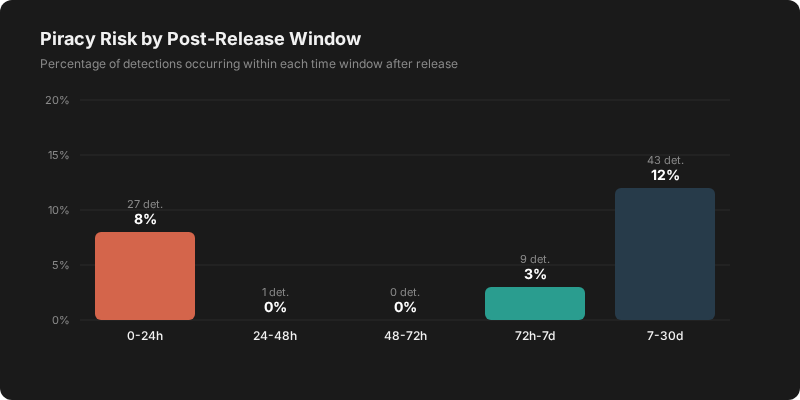
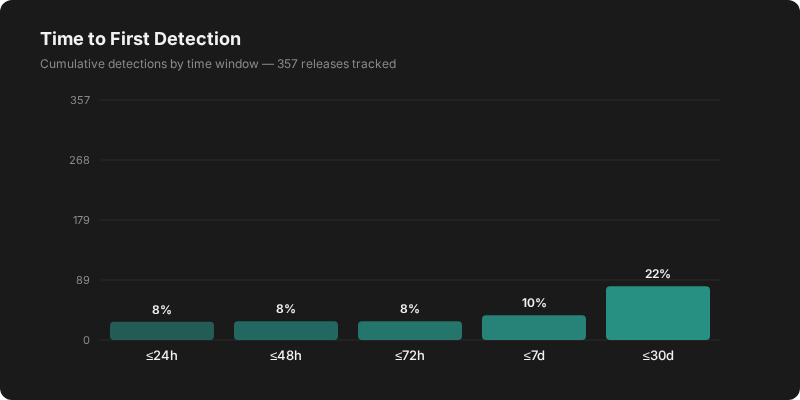
One of the clearest examples of why the first 72 hours after release matter is anti-piracy response. Forward Digital's Shield data across 357 tracked releases shows that piracy pressure starts immediately. In the sample, 8% of all piracy detections happened within the first 24 hours after release. That equals 27 detections in the most sensitive window of the release cycle. After that, activity does not simply disappear. The bigger operational issue is that once piracy is detected, takedown response often takes weeks, not hours. That is the real risk for indie labels. The first 72 hours matter not only because detection starts on day one, but because any delay in response compounds over time. A day-one detection problem can easily become a 30-day revenue leak if the takedown process starts too late.
Why takedown speed matters more than most labels realize
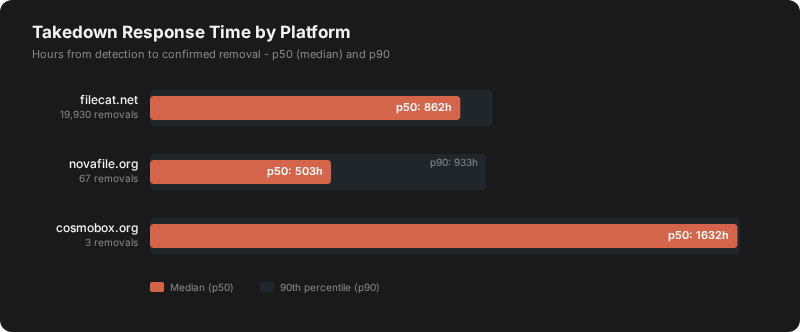
Shield enforcement data also shows how long removal can take once content is detected. Median takedown times in the sample reached: 862 hours for filecat.net, 503 hours for novafile.org, 1,632 hours for cosmobox.org. That means labels are not dealing with a same-day cleanup problem. They are dealing with an exposure problem that can stay live for weeks or even longer. For release week, that changes the logic completely. If piracy detection starts in the first 24 hours, but enforcement drags on for weeks, then the operational priority is obvious: labels need detection to happen as early as possible, and they need takedown workflows that start immediately.
Where unauthorized content actually concentrates
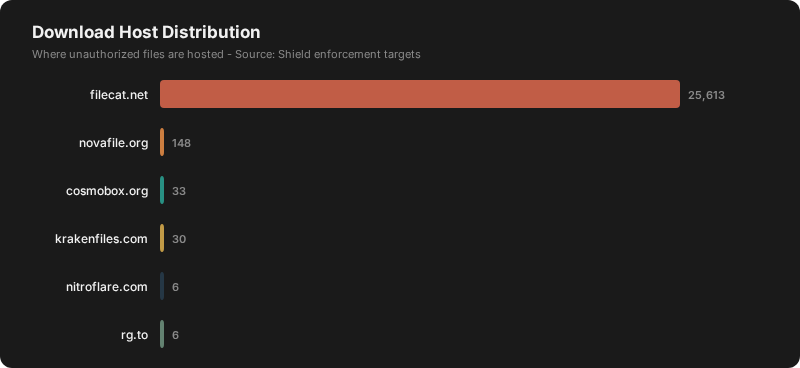
Another useful pattern from the Shield data is concentration. Filecat.net alone accounted for 25,613 unauthorized files in the measured sample, far more than any other host. The next platforms were dramatically smaller. That concentration matters because it shows that anti-piracy for indie labels is not just about broad monitoring. It is about knowing where pressure actually clusters and responding through systems that can target the dominant hosts fast. In other words, labels do not just need anti-piracy in theory. They need operational anti-piracy that connects detection, prioritization, and takedown action.
Why music distribution infrastructure has to change
This is also why more independent labels are rethinking what music distribution infrastructure should actually do. For years, music distribution was treated as a delivery task. Upload the release, push it out, then manage everything else somewhere else. That model no longer matches the reality of release week. Release operations, metadata control, artist reporting, payouts, promo coordination, analytics, and anti-piracy are no longer separate concerns. In practice, they all collide in the same window, especially in the first 72 hours after release. If a label has to jump between multiple disconnected systems just to stay on top of one live release, the workflow is already too fragmented. That fragmentation costs time, team focus, artist trust, and revenue.
The labels that will win release week
The labels that will win over the next few years will not just be the ones with the best taste, strongest branding, or biggest roster. They will be the ones that can operate cleanly when a release is live. They will be the ones that can move fast without getting messy, keep metadata accurate, answer artists clearly, manage payouts and reporting with confidence, detect piracy early, and connect music distribution, catalog protection, and release operations in one system. The release is not really tested on launch day. It is tested in the 72 hours that follow. And for indie labels, that is where the gap between activity and control becomes impossible to ignore.
Method note: This article references aggregated data from Forward Digital's Shield anti-piracy system across 357 tracked releases, using detection timestamps, host-level enforcement records, and takedown completion data from the measured sample.
release weekindependent labelsfirst 72 hoursrelease operationsmusic distributionanti-piracy
Ready to distribute your music?
Join Forward Digital and distribute your catalog to all major streaming platforms worldwide.